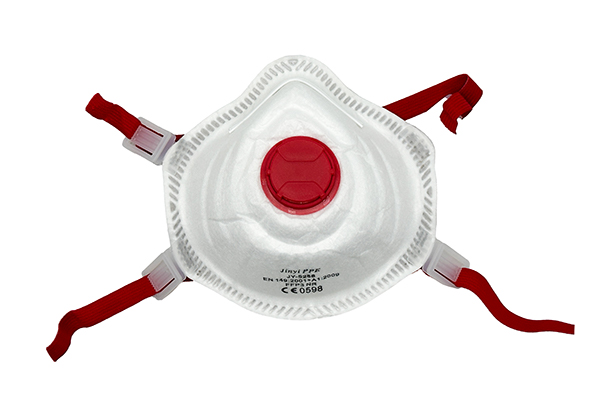
KEY WORDS:respirator with valvefilter cartridgecombined vapor cartridge


The core differences between full-face respirators and half-face respirators mainly lie in four key dimensions: facial coverage, protection efficiency, applicable scenarios, and wearing experience. Below is a detailed breakdown of their specific differences to help you clearly distinguish and select them properly.
I. Core Differences in Facial Coverage
The most intuitive difference is the area of facial coverage, which directly affects the comprehensiveness of protection:
(a)Full-face respirator: It can completely wrap the entire face, covering all key protective parts such as the eyes, nose, mouth, and chin. No additional facial protection equipment is needed, realizing one-stop facial protection.
(b)Half-face respirator: It only covers the nose, mouth and chin area, leaving the eyes completely exposed without eye protection. Therefore, goggles must be additionally used in scenarios requiring eye protection.
II. Different Focuses of Protection Performance
The two have different focuses in protective capacity, adapting to protection needs of different risk levels, as specified below:
(a)Sealing performance: Full-face respirators feature better sealing performance with lower gas leakage rate, stronger resistance to the penetration of toxic and harmful gases, and more guaranteed protection stability.
(b)Protection targets: Half-face respirators have a relatively single protection scope, mainly targeting particulate pollutants such as dust and smoke. In contrast, full-face respirators provide a wider range of protection. In addition to resisting particulates, they can effectively block corrosive chemical substances such as toxic gas, chlorine gas and hydrogen sulfide, offering more comprehensive protection.
III. Precise Differentiation of Applicable Scenarios
Combined with protection performance and coverage, their applicable scenarios are precisely divided to match operating environments of different risk levels respectively:
(a)Full-face respirator: Mainly used in high-risk scenarios with high risk levels, such as:
(1) Hazardous environments with high concentrations of toxic gases, such as chemical raw material leakage and fire rescue;
(2) Confined space operations and petrochemical and other scenarios involving direct contact with corrosive substances.
(b)Half-face respirator: Suitable for conventional operating environments with low risk levels, such as:
(1) Daily dust protection scenarios, such as cement operations at construction sites and wood processing operations producing wood chips;
(2) Low-risk operations such as short-term spray painting and municipal infrastructure construction.

Tel: +86 15992462208
whatsapp: +86 15992462208

mellenwell2208@gmail.com

Room 206, Building H, 2058 E-commerce Creative Park, Longyancheng, Huanggang Town, Raoping County, Guangdong Province, China.
Worktime: Monday to Saturday (24 hours online)
We also offer customization